Gallstones
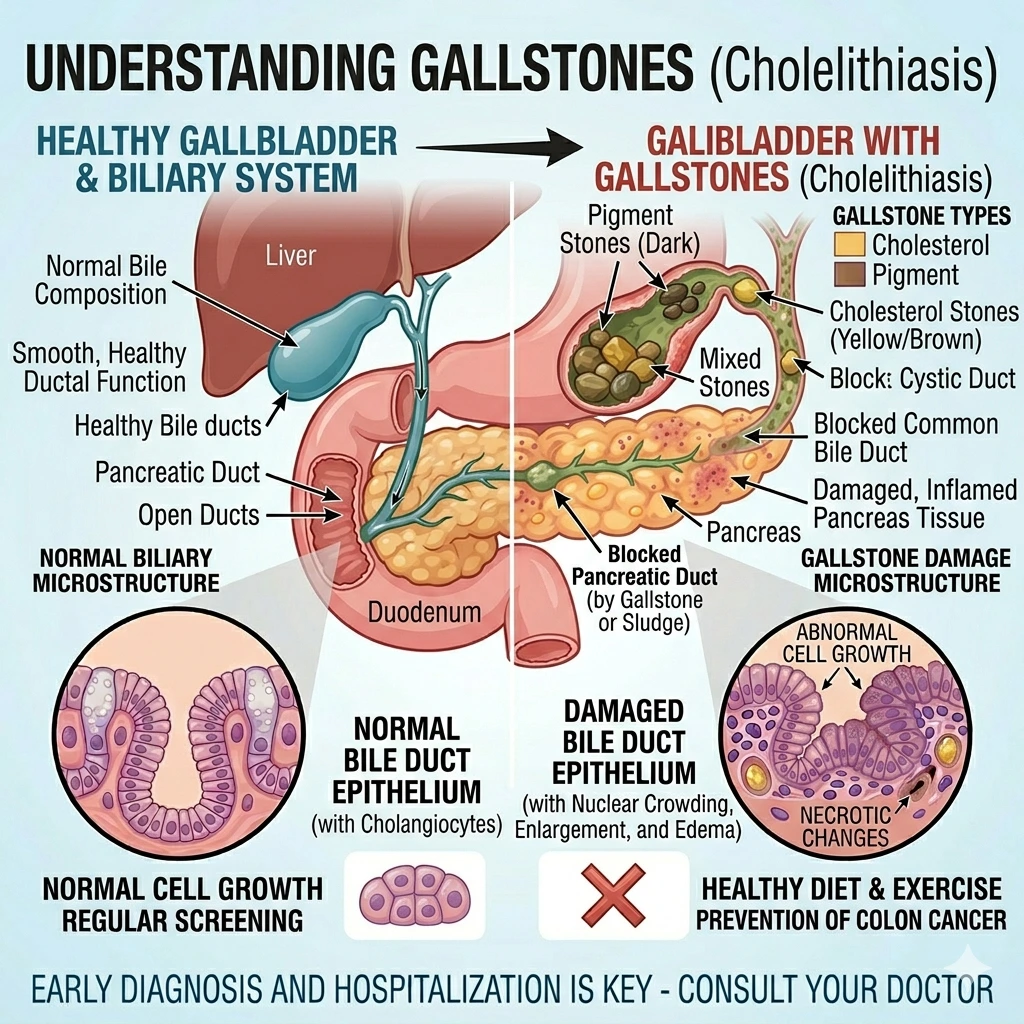
Gallstones are small, hard deposits that form in the gallbladder, a small pouch under your liver that helps digest food.
Think of them like tiny stones formed from digestive fluids. Some are as small as grains of sand, while others can grow larger and start causing problems.
Many people don’t even know they have gallstones — until one day they experience sudden, intense pain after eating.
Common Symptoms to Watch For
Not everyone gets symptoms, but when they do, you may notice:
- Pain after eating (especially fatty meals)
- Bloating or heaviness
- Nausea or vomiting
- Indigestion that keeps coming back
- Feeling unusually full after small meals
- Repeated “gas attacks” that feel different from normal gas
How are Gallstones Diagnosed?
The most common and reliable test is:
Ultrasound
- Quick, painless, and highly accurate
- Detects even small gallstones
Your doctor may also recommend:
- Blood tests (to check infection or blockage)
- CT scan or MRCP (in complicated cases)
Gallstones treatment at Lifeline Clinic
Comprehensive Evaluation
Accurate Diagnosis
Personalized Treatment
Treatment for Gallstones
The most effective and permanent solution is:
Gallbladder Removal Surgery (Laparoscopic Cholecystectomy)
- Minimally invasive (small cuts)
- Safe and commonly performed
- Most patients go home within 1–2 days
- You can live a normal life without a gallbladder
Your body will still digest food — bile simply flows directly from the liver.
When to seek medical help?
You should consult if you have:
- Repeated abdominal pain after meals
- Unexplained digestive discomfort
- Sudden severe pain episodes
- Symptoms that are getting worse over time
Related Images
Other Conditions
Frequently Asked Questions
I get pain after eating oily food. Is it just gas or gallstones?
If the pain is sharp, happens repeatedly, and is felt in the upper right abdomen or back, it could be gallstones rather than simple gas.
Can I delay surgery if the pain is manageable?
You can delay if symptoms are mild, but once pain starts recurring, the chances of complications increase. It’s better to consult early.
Will I have digestion problems after gallbladder removal?
Most people digest food normally after surgery. Some may need a short adjustment period, but long-term issues are uncommon.
I feel bloated all the time. Could this be gallstones?
Bloating alone is common and not always due to gallstones, but if it is associated with pain after meals, it should be evaluated.