Colon Polyps
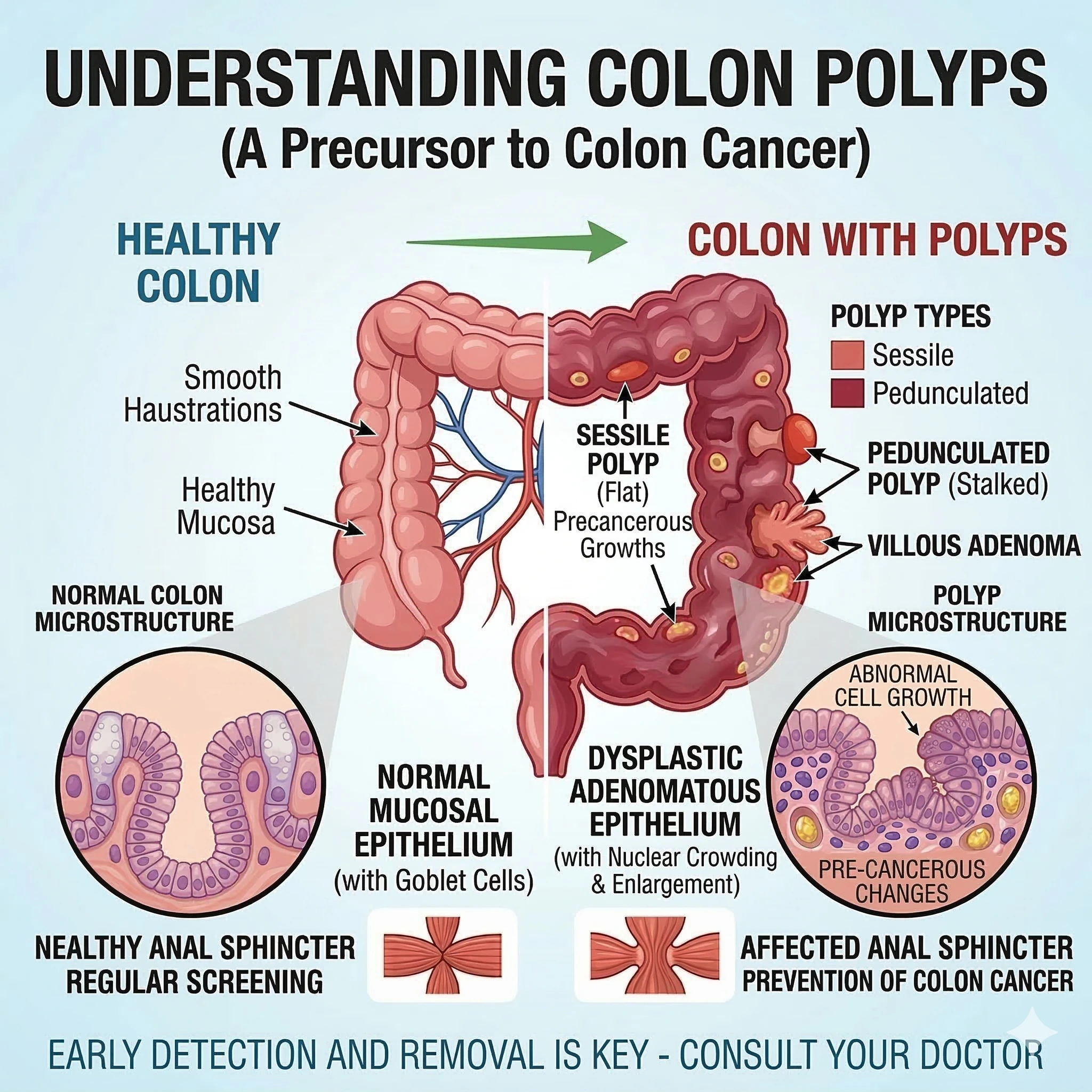
Colon polyps are small growths that develop on the inner lining of the colon (large intestine) or rectum. Most polyps are harmless, but some types can slowly develop into colon cancer over time if they are not detected and removed early.
Many people with colon polyps do not experience any symptoms, which is why regular screening and colonoscopy are important, especially for people over the age of 45 or those with risk factors.
There are different types of colon polyps, and their cancer risk varies.
Adenomatous Polyps (Adenomas)
These are the most common type of precancerous polyps. Although not all adenomas become cancerous, most colon cancers begin as this type of polyp.
Hyperplastic Polyps
These polyps are usually small and generally considered low risk for cancer, especially when they occur in the lower colon.
Serrated Polyps
Some serrated polyps can become cancerous if left untreated. Their risk depends on their size and location in the colon.
Common Symptoms to Watch For
Many colon polyps do not cause symptoms, but when symptoms occur they may include:
- Blood in the stool
- Rectal bleeding
- Changes in bowel habits
- Persistent constipation or diarrhea
- Abdominal discomfort
- Unexplained anemia
- Mucus in stool
- Fatigue due to slow blood loss
How is Colon Polyps Diagnosed?
Colonoscopy
A colonoscopy is the most accurate test to detect colon polyps. During this procedure, a thin flexible tube with a camera is used to examine the entire colon.
If polyps are found, they can often be removed immediately during the same procedure.
Stool Tests
Some stool tests can detect hidden blood in the stool, which may indicate polyps or other digestive problems.
CT Colonography
This imaging test creates detailed images of the colon and may detect larger polyps.
Colon Polyps treatment at Lifeline Clinic
Comprehensive Evaluation
Accurate Diagnosis
Personalized Treatment
Treatment for Colon Polyps
The most effective treatment for colon polyps is removal during colonoscopy, a procedure called polypectomy.
During colonoscopy:
- The doctor identifies the polyp
- Special instruments are used to remove it
- The tissue is sent for laboratory examination
Removing polyps early helps prevent colorectal cancer.
Preventing Colon Polyps
While not all polyps can be prevented, certain lifestyle habits may reduce the risk:
- Eat a diet rich in fruits, vegetables, and fiber
- Limit red and processed meats
- Maintain a healthy body weight
- Exercise regularly
- Avoid smoking
- Limit alcohol consumption
- Get regular colon cancer screening
When to seek medical help?
You should consult a gastroenterologist if you notice:
- Blood in the stool
- Persistent changes in bowel habits
- Unexplained anemia
- Abdominal pain that does not go away
- Family history of colon cancer
Related Images
Other Conditions
Frequently Asked Questions
I found blood in my stool. Could it be a colon polyp?
Blood in the stool can have several causes, including hemorrhoids, infections, or colon polyps. A medical evaluation is needed to identify the exact cause.
If someone in my family had colon polyps, am I at risk?
Yes. A family history of colon polyps or colon cancer may increase your risk. In such cases, doctors may recommend earlier or more frequent colonoscopy screening.
What size colon polyp is considered dangerous?
Larger polyps (generally more than 1 cm) have a higher chance of becoming cancerous compared to very small polyps. This is why doctors usually recommend removing polyps whenever they are detected.
When should someone get screened for colon polyps?
Most people should start colon cancer screening around age 45. People with a family history of colon cancer or colon polyps may need screening earlier.