Crohn’s Disease
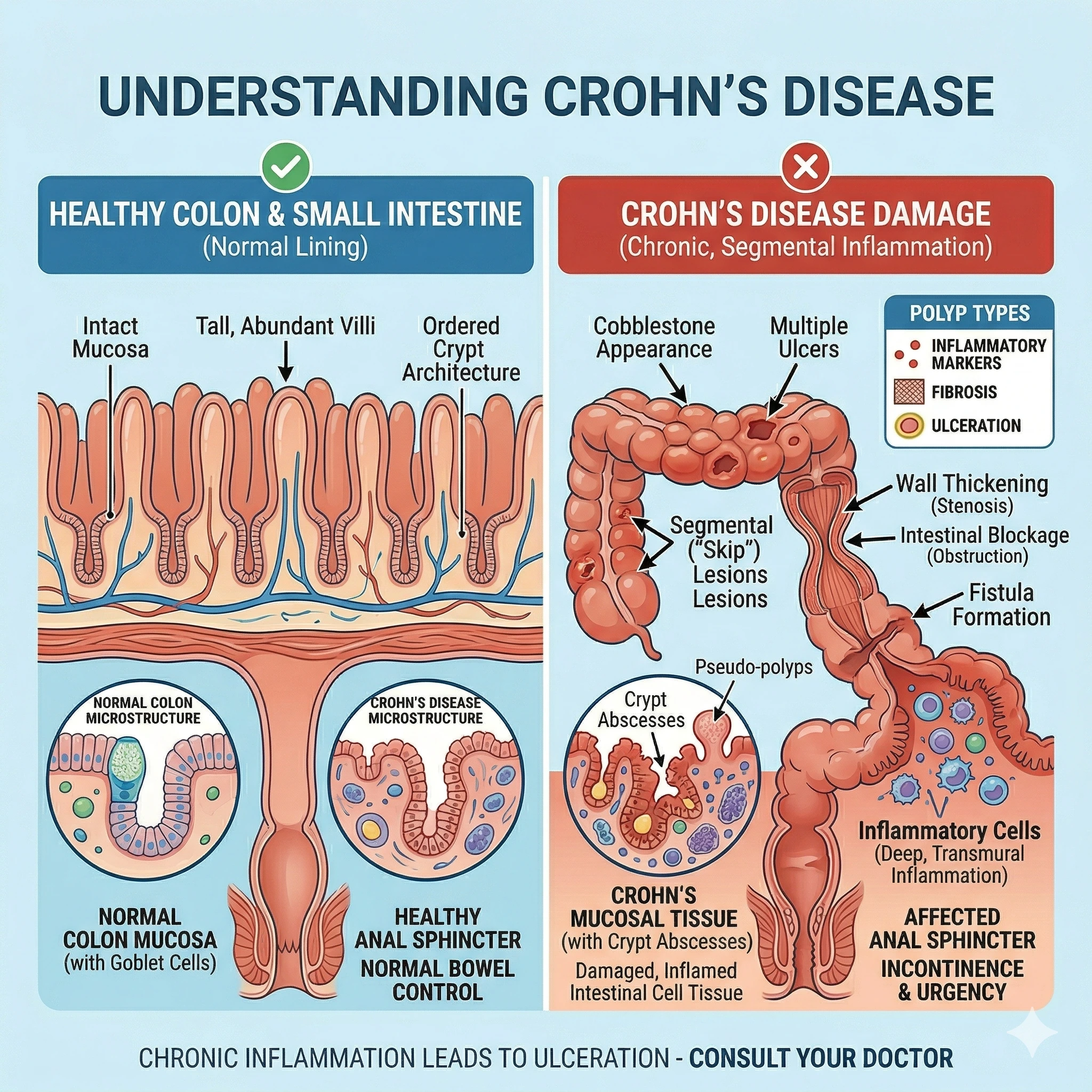
Crohn’s disease is a chronic inflammatory condition that affects the digestive tract, most commonly the small intestine and the beginning of the large intestine (colon). It is a type of Inflammatory Bowel Disease (IBD).
In Crohn’s disease, the immune system mistakenly attacks the lining of the digestive tract, causing inflammation, swelling, and ulcers. This inflammation can affect deeper layers of the intestinal wall and may lead to long-term digestive problems.
Crohn’s disease usually develops gradually and can cause periods of active symptoms (flare-ups) followed by periods of remission, where symptoms improve.
Although there is currently no permanent cure, proper treatment can help control inflammation, relieve symptoms, and improve quality of life.
Common Symptoms to Watch For
• Persistent diarrhea
• Abdominal pain or cramping
• Fatigue and weakness
• Unexplained weight loss
• Blood in stool
• Loss of appetite
• Fever during flare-ups
• Urgent need to pass stool
How is Crohn’s Disease Diagnosed?
Blood Tests
Blood tests may help detect inflammation, anemia, or nutritional deficiencies.
Stool Tests
Stool tests can help rule out infections and detect signs of intestinal inflammation.
Colonoscopy
A colonoscopy allows doctors to examine the colon and small intestine using a flexible camera. Tissue samples (biopsies) may be taken for further analysis.
Imaging Tests
CT scans or MRI scans may be used to evaluate inflammation and complications in the digestive tract.
Early diagnosis helps start treatment before complications develop.
Crohn’s Disease treatment at Lifeline Clinic
Comprehensive Evaluation
Accurate Diagnosis
Personalized Treatment
Treatment for Crohn’s Disease
Treatment focuses on reducing inflammation, controlling symptoms, and preventing complications.
Medications
Doctors may prescribe medications that:
• Reduce intestinal inflammation
• Suppress abnormal immune activity
• Control symptoms during flare-ups
Nutritional Therapy
Dietary adjustments may help manage symptoms and improve nutrition.
Lifestyle Changes
Avoiding smoking, managing stress, and maintaining a healthy diet may help reduce flare-ups.
Surgery
In some cases, surgery may be needed to remove severely damaged sections of the intestine or treat complications such as strictures or fistulas.
When to seek medical help?
• Persistent diarrhea
• Blood in stool
• Severe abdominal pain
• Unexplained weight loss
• Ongoing digestive symptoms
Related Images
Other Conditions
Frequently Asked Questions
I keep having diarrhea and stomach pain for weeks. Could this be Crohn’s disease?
Persistent diarrhea combined with abdominal pain may be a sign of inflammatory bowel disease such as Crohn’s disease. However, similar symptoms can occur with infections or other digestive disorders, so medical evaluation is necessary.
Can Crohn’s disease be cured permanently?
Currently there is no permanent cure for Crohn’s disease, but treatment can help control inflammation and keep symptoms in remission for long periods.
What foods can trigger Crohn’s disease flare-ups?
Some people notice symptoms worsen after eating spicy foods, fatty foods, dairy products, alcohol, or highly processed foods, although triggers vary between individuals.
Is Crohn’s disease a serious condition?
Crohn’s disease is a chronic condition that requires long-term management. With proper treatment and regular monitoring, many people are able to control symptoms and maintain a normal lifestyle.