Celiac Disease
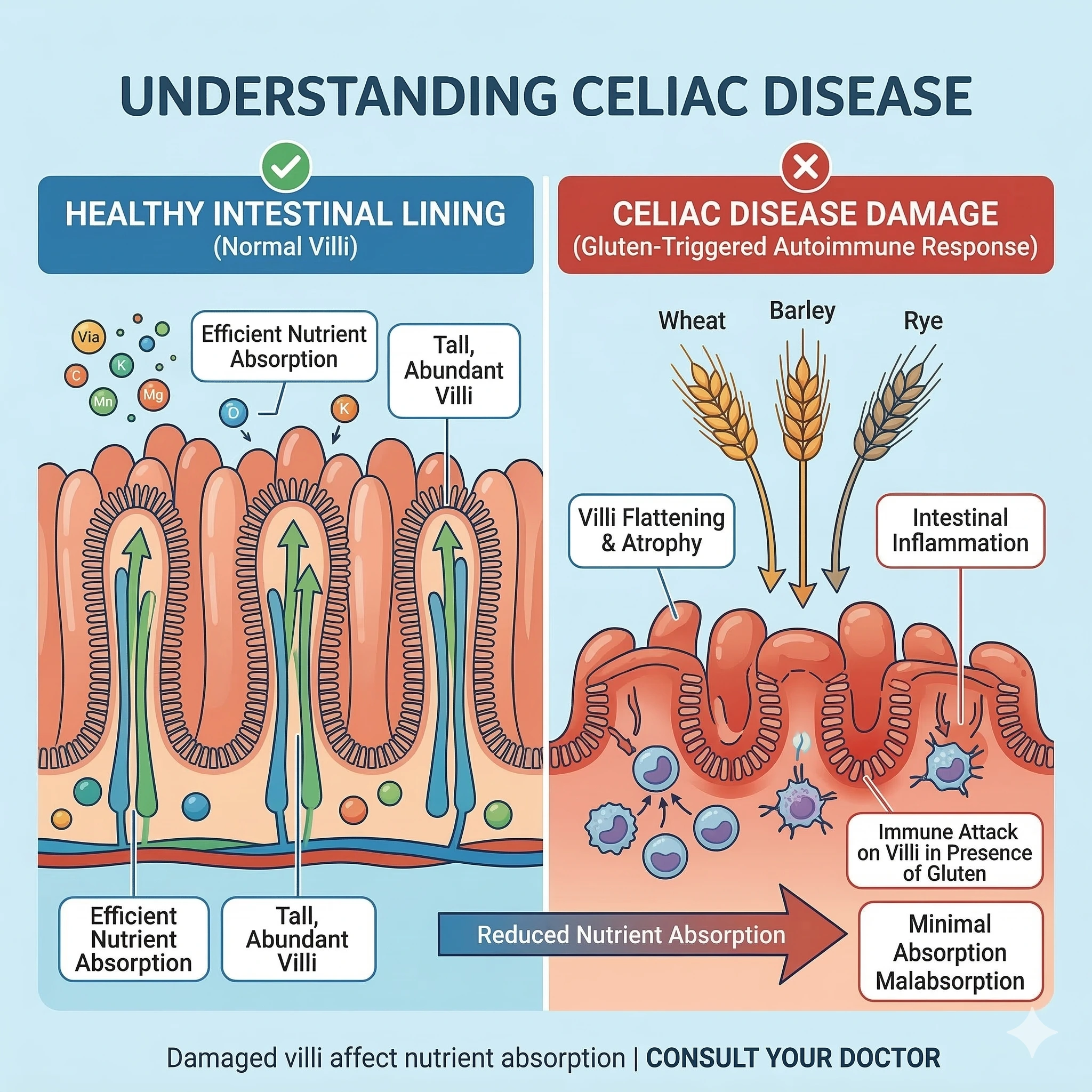
Celiac disease is an autoimmune disorder in which the body reacts abnormally to gluten, a protein found in wheat, barley, and rye. When a person with celiac disease consumes gluten, the immune system attacks the lining of the small intestine, causing inflammation and damage.
This damage affects the intestine’s ability to absorb nutrients properly, which can lead to digestive problems, fatigue, nutritional deficiencies, and other health issues.
Celiac disease is a long-term condition, but symptoms can be effectively controlled by following a strict gluten-free diet.
Common Symptoms to Watch For
• Chronic diarrhea
• Abdominal pain or cramping
• Bloating and gas
• Unexplained weight loss
• Fatigue
• Nausea or vomiting
• Constipation
• Pale or foul-smelling stools
• Nutritional deficiencies
• Iron-deficiency anemia
Some patients may also experience non-digestive symptoms, such as:
• Skin rashes (dermatitis herpetiformis)
• Bone or joint pain
• Headaches
• Tingling or numbness in hands and feet
• Delayed growth in children
Because symptoms can vary widely, celiac disease sometimes goes undiagnosed for years.
How is Celiac Disease Diagnosed?
Blood Tests
Blood tests are often the first step. These tests look for specific antibodies that indicate an immune reaction to gluten.
Endoscopy with Biopsy
If blood tests suggest celiac disease, doctors may perform an upper endoscopy to examine the small intestine and take a small tissue sample (biopsy).
This biopsy helps confirm damage to the intestinal lining.
Genetic Testing
In some cases, genetic testing may be used to identify genes associated with celiac disease.
Celiac Disease treatment at Lifeline Clinic
Comprehensive Evaluation
Accurate Diagnosis
Personalized Treatment
Treatment for Celiac Disease
The primary treatment for celiac disease is a lifelong gluten-free diet.
Avoiding gluten allows the small intestine to heal and prevents further damage.
Foods that must be avoided include:
• Wheat
• Barley
• Rye
• Foods containing these grains
Many naturally gluten-free foods can still be safely consumed, such as:
• Fruits and vegetables
• Rice
• Corn
• Potatoes
• Meat, poultry, and fish
• Dairy products (if tolerated)
A dietitian may help patients plan a balanced gluten-free diet.
When to seek medical help?
• Chronic diarrhea or digestive discomfort
• Persistent bloating after meals
• Unexplained weight loss
• Nutritional deficiencies or anemia
• Family history of celiac disease
Related Images
Other Conditions
Frequently Asked Questions
I feel bloated and uncomfortable every time I eat bread or wheat. Could this be celiac disease?
Persistent bloating, stomach discomfort, or digestive symptoms after eating foods containing gluten may be a sign of celiac disease or gluten sensitivity. Medical testing is needed to confirm the diagnosis.
What happens if someone with celiac disease eats gluten?
Eating gluten triggers an immune reaction that damages the lining of the small intestine, leading to inflammation and digestive symptoms.
Can celiac disease be cured?
There is currently no permanent cure for celiac disease. However, symptoms can be completely controlled by following a strict gluten-free diet.
Is celiac disease the same as gluten intolerance?
No. Celiac disease is an autoimmune condition, while gluten intolerance (non-celiac gluten sensitivity) does not cause the same intestinal damage.